
Introduction
Home heating and cooling technology has undergone dramatic advancements in recent years. In homes across the country, traditional HVAC systems are giving way to more innovative and energy-efficient units. Among these innovations, inverter technology is quickly gaining ground for its ability to reduce bills and increase overall comfort. With the rise of solutions like the air conditioner heat pump, homeowners now have access to dependable options that optimize performance throughout the year.
Unlike conventional systems that operate at a fixed speed, inverter-driven models precisely adapt to real-time needs in your living space. This innovation addresses two key consumer demands: minimizing wasted energy and creating a more consistent, quieter indoor environment. As utility costs and environmental concerns continue to shape choices around home heating and cooling, the benefits of inverter technology place it at the forefront of the HVAC revolution.
Understanding Inverter Technology
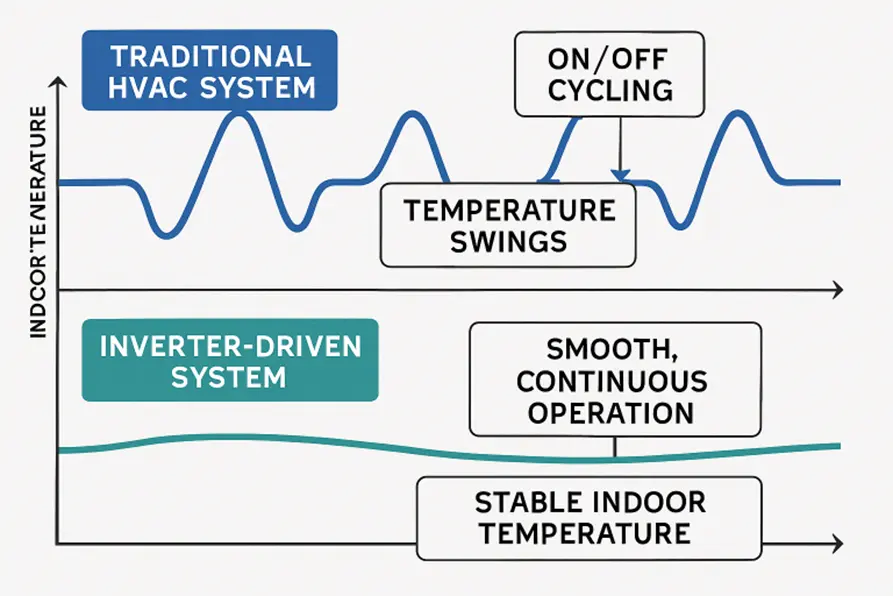
Inverter technology utilizes variable-speed compressors within an HVAC system. Traditional systems turn on at full power, then shut off repeatedly to reach the set temperature. This pattern creates temperature swings, wasted energy, and frequent mechanical stress. Inverter systems, by contrast, constantly measure room conditions and adjust compressor speed to match exactly what’s needed.
The steady, incremental adjustments possible with inverter-driven compressors allow these systems to maintain comfort with far greater efficiency. This level of precision provides not only better temperature control but also improved humidity management, which is essential for maintaining healthy indoor air quality. For a deeper explanation of how inverters work to maintain ideal comfort, the U.S. Department of Energy’s guide to heat pumps provides valuable insights.
Energy Efficiency and Cost Savings
Energy efficiency is at the core of inverter technology’s appeal. By eliminating the constant on-off cycling of conventional compressors, inverters consume less electricity and put less wear on system components. Over time, this translates to lower monthly utility bills and reduced maintenance requirements. According to the U.S. Department of Energy, inverter-driven units can deliver energy savings of 30-50% compared to older models operating without variable speed functionality.
The financial benefits are especially noteworthy for homes in regions with extreme temperatures or heavy HVAC demands. In environments that require year-round heating or cooling, even small gains in efficiency can yield hundreds of dollars in annual savings. Over the whole lifespan of a system, the investment in inverter technology often pays for itself through reduced operational costs. For a global perspective on these trends and the types of inverter-equipped systems leading the market, resources like EnergySage’s guide to the best cold climate heat pumps offer up-to-date reviews and comparisons.
Enhanced Comfort and Performance
Alongside its efficiency, inverter technology provides significant gains in comfort and performance. A major advantage is the absence of abrupt temperature fluctuations compared to familiar single-speed units. Rather than waiting for the system to kick in, inverters continuously make minor adjustments, resulting in a stable indoor climate. This also leads to better humidity regulation, reducing the risk of mold and improving everyday indoor air quality.
Noise Reduction and Reliability
Homeowners often notice that inverter systems operate significantly quieter. Since the compressor rarely runs at full power, there’s less vibration and fewer disruptive noises. This subtle operation is particularly valuable in bedrooms and home offices, where peace is prized. Moreover, because inverter systems are less prone to stress from constant starting and stopping, they tend to last longer and require fewer repairs than their fixed-speed counterparts.
Environmental Impact
The ability of inverter systems to reduce energy consumption offers direct environmental benefits. Lower electricity use translates into fewer greenhouse gas emissions, which is essential in the fight against climate change. As countries set ambitious goals for energy efficiency and carbon reduction, wider adoption of inverter-based HVAC systems represents a practical and effective way to help meet these commitments.
Inverter technology also supports the transition to cleaner energy grids. Because these units use less power and can operate efficiently at partial loads, they place fewer demands on electrical infrastructure—particularly during peak usage times.
Market Trends and Adoption
The shift toward inverter-driven heating and cooling is now reflected in market trends and industry standards. Manufacturers, both established and new, are rapidly expanding their inverter product lines to meet the needs of energy-conscious homeowners. Innovations from industry leaders such as Daikin, which recently advanced in the U.S. Department of Energy’s Cold Climate Heat Pump Challenge, are driving market growth and setting higher expectations for system performance.
Government incentives and rebates for high-efficiency HVAC installations further support this momentum. As public awareness grows and regulations evolve, inverter technology is poised to become the new standard in residential comfort and efficiency.
Considerations for Homeowners
Switching to an inverter-based HVAC system offers clear advantages; however, homeowners should plan carefully to maximize these benefits. The initial investment may be higher than traditional models, but the long-term energy savings generally offset these upfront costs. Compatibility with existing ductwork and service infrastructure also plays a role, as does the local climate.
Consulting with an experienced HVAC professional helps ensure that you select the right system type, size, and installation strategy for your home. Look for contractors familiar with inverter-based technologies and who can provide accurate cost-benefit analyses tailored to your specific needs.
Conclusion
Inverter technology is revolutionizing the future of home heating and cooling by making systems more efficient, quieter, and brighter. Homeowners who prioritize energy savings, comfort, and environmental stewardship are increasingly turning to inverter-driven solutions. As technology matures and continues to spread, it promises not only lower utility bills and improved comfort but also meaningful contributions to a more sustainable and resilient energy future.