Water damage can be a homeowner’s worst nightmare, especially when it lurks unseen, causing gradual deterioration. Understanding how to identify and prevent hidden water damage is crucial to maintaining a safe and sound home. For comprehensive assistance, consider professional water damage mitigation services.
Common Sources of Hidden Water Damage
Several areas in your home are prone to concealed water damage:
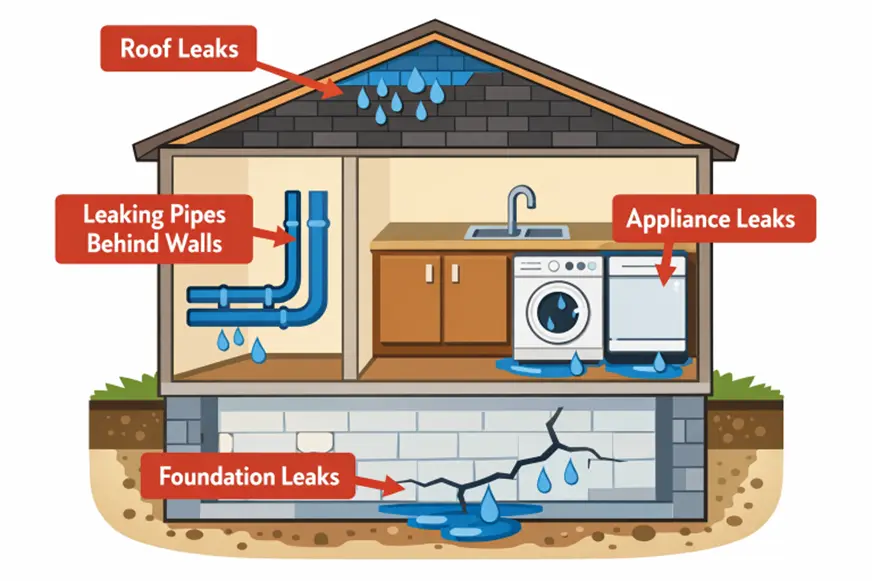
- Roof Leaks: Damaged shingles or compromised flashing can allow water to seep into your attic, leading to structural issues and mold growth.
- Plumbing Leaks: Pipes hidden behind walls or under floors can develop leaks that go unnoticed until significant damage has occurred.
- Appliance Malfunctions: Dishwashers, washing machines, and water heaters can leak internally, causing damage to surrounding areas.
- Foundation Cracks: Small cracks in your home’s foundation can permit water intrusion, especially during heavy rains.
Signs of Hidden Water Damage
Be vigilant for these indicators:
- Unusual Odors: A musty smell often signifies mold or mildew resulting from moisture buildup.
- Discoloration: Stains on walls or ceilings can indicate water seepage.
- Warped Flooring: Buckling or warping of floors may suggest water damage beneath the surface.
- Peeling Paint or Wallpaper: Moisture can cause paint and wallpaper to lose adhesion.
Preventive Measures to Safeguard Your Home
Implementing proactive strategies can significantly reduce the risk of hidden water damage:
Regular Maintenance
- Inspect Roofing: Regularly check for damaged or missing shingles and ensure flashing is intact.
- Clean Gutters and Downspouts: Remove debris to prevent water overflow that can damage your roof and foundation.
- Check Plumbing: Look for signs of leaks under sinks, around toilets, and near appliances.
Install Water Detection Devices
Utilize technology to monitor for leaks:
- Leak Detectors: Place sensors in high-risk areas to receive alerts at the first sign of moisture.
- Automatic Shut-Off Valves: These devices can cut off the water supply when a leak is detected, minimizing potential damage.
Maintain Proper Drainage
- Grade Landscaping: Ensure the ground slopes away from your home’s foundation to direct water flow.
- Extend Downspouts: Position downspouts to discharge water at least five feet away from the foundation.
Additional Hidden Threats and Areas to Monitor
Beyond the commonly known sources, there are other parts of your house that, if overlooked, can foster hidden water damage:
- Windows and Doors: Improper seals or aging caulk around frames can allow water infiltration, especially following storms. Check for condensation, soft wood, or mold formation on sills.
- Basements and Crawl Spaces: Because these areas are below ground level, they’re more vulnerable to groundwater seepage. Watch for a persistent damp feel, wet spots, or visible efflorescence on slab or wall surfaces.
- Exterior Walls: Cracked siding or aged stucco can channel rainwater into your home’s structure. Routinely inspect external walls for cracks, chips, or discolored patches.
How Hidden Water Damage Impacts Health
Prolonged moisture issues don’t just endanger property; they can undermine household health. Mold growth, a common consequence of hidden water intrusion, releases spores that can aggravate allergies, asthma, and respiratory ailments. Even before visible mold appears, elevated humidity and concealed leaks can spawn bacteria and dust mites. Ensuring dry, well-ventilated areas assists in safeguarding your family’s well-being.
Expert Tips for Water Damage Prevention
Many small actions can prevent large-scale water disasters:
- Upgrade Fixtures: Consider modern, water-efficient fixtures with built-in leak detection.
- Monitor Water Bills: A sudden spike in usage may signal an undetected leak—review monthly bills for unusual increases and investigate promptly.
- Seal Vulnerable Zones: Apply high-quality caulk or sealants around tubs, showers, backsplashes, and basement windows.
- Schedule Professional Inspections: Plumbing and roofing professionals can spot early warning signs invisible to most homeowners.
DIY Inspection Checklist
Here is a routine checklist you can follow every few months to catch water damage early:
- Look beneath sinks and around appliance bases for dampness or corrosion.
- Check attic insulation for damp spots or moldy odors.
- Test sump pumps in basements and crawl spaces, especially before rainy seasons.
- Inspect ceilings for bulges, stains, or soft spots, even on upper floors.
- Review outdoor hose connections for drips or puddling.
When to Seek Professional Help
If you suspect hidden water damage, it’s essential to consult professionals. Companies like HH Restoration specialize in water damage mitigation, offering comprehensive services to identify and address issues effectively. With expertise in handling various water damage scenarios, HH Restoration serves multiple areas, ensuring homeowners receive prompt and reliable assistance.
What to Expect from a Professional Water Damage Inspection
When contacting a water damage mitigation specialist, expect a thorough inspection using advanced tools such as infrared cameras, moisture meters, and hygrometers to detect unseen problems. Licensed experts can provide a detailed assessment, outline necessary repairs, and offer strategies for ongoing prevention.
Conclusion
Hidden water damage poses a significant threat to your home’s integrity and your family’s health. By staying vigilant, performing regular maintenance, and utilizing modern detection tools, you can protect your home from the unseen dangers of water damage. Remember, proactive measures today can prevent costly repairs tomorrow.
Investing time in prevention will give you peace of mind and a healthier, more secure living environment. For any signs of possible water damage, act quickly to ensure your home remains strong and dry for years to come.
Also Read
- Integrating Tech Solutions for Enhanced Manufacturing Efficiency
- Professional Sanitation Solutions for Business Facilities
- Why a Home-Like Setting in Senior Living Improves Comfort, Well-Being, and Quality of Life

James is a senior editor at axprassion.com with over a decade of experience in crafting compelling narratives and making complex topics accessible. His articles and interviews with industry leaders have earned him recognition as a key influencer by organisations like Onalytica. Under his leadership, publications have been praised by analyst firms such as Forrester for their excellence and performance. Connect with him on