Shade matching for multigenerational restorations can feel personal. You want your smile to fit your face, your age, and your family story. You also want your teeth to look real in every light. Not too bright. Not too dull. Just honest.
This blog explains how shade matching works for grandparents, parents, and teens who share similar dental needs. You learn what your dentist looks for in your skin tone, lip color, and eye color. You see how age changes tooth color and shape. You also see how old dental work affects new work.
You discover how photos, shade guides, and digital tools help match crowns, veneers, and fillings across generations. You gain clear steps to ask for the look you want. You also understand why patience during this process matters. For many families seeking Cosmetic Dentistry in North Richland Hills, TX, shade matching is where trust begins.
Why Tooth Color Changes With Age
You do not imagine it. Teeth change over time. The outer enamel thins. The inner dentin grows. Color shifts.
Common patterns include three changes.
- Child and teen teeth look lighter and more even.
- Adult teeth look slightly darker and less uniform.
- Older adult teeth often show gray or yellow tones and more wear.
Food stains, past fillings, and past crowns add more change. The result is a family with many different shades and textures in one photo. Shade matching brings these parts closer together without copying one person’s teeth for everyone.
The National Institute of Dental and Craniofacial Research explains how enamel and dentin affect tooth color and strength.
What Your Dentist Sees When Matching Shade
Shade is not just “white.” Your dentist studies three things.
- Hue. The base color is more yellow, more brown, or more gray.
- Chroma. The strength of that color.
- Value. How light or dark the tooth looks.
You also bring your own features. Skin tone, lip color, and eye color influence what looks natural. Lighting matters too. Office lights, daylight, and indoor lamps change how your teeth appear. Good shade matching checks color under more than one type of light.
Tools That Support Shade Matching
Your dentist often combines three tools.
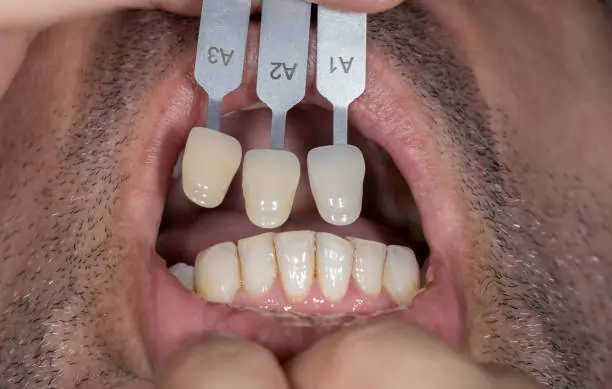
- Traditional shade guides with small sample teeth.
- Digital photos and videos of your smile from many angles.
- Electronic shade devices that measure color.
The lab then uses these records to build crowns, veneers, or fillings that blend with your natural teeth and with past work. When a grandparent, parent, and teen all need care, the lab uses each person’s records to keep every smile true to age and history.
Comparing Shade Options Across Generations
| Family Member | Common Tooth Look | Shade Goal | Typical Choices |
|---|---|---|---|
| Teen or Young Adult | Lighter, smoother teeth | Keep natural brightness | Conservative whitening, small bonded fillings |
| Parent | Slightly darker, some wear or stains | Even color that still fits age | Crowns or veneers matched to nearby teeth |
| Grandparent | Darker tones, more visible repairs | Gentle brightening without fake look | Blended crowns, bridgework, or dentures |
This table shows how each person’s goal differs. A teen may want the brightest shade. A grandparent may want comfort and function first. Shade then supports that choice. You do not need one “family color.” You need harmony in group photos and daily life.
How Old Dental Work Affects New Restorations
Older fillings, crowns, and bonding do not change color like natural teeth. Coffee or tea may stain your natural enamel. The old crown may stay the same. That mix can make matching harder.
When you plan new work, your dentist often checks three points.
- Whether to replace stained or chipped older work so shades match better.
- Whether to lighten natural teeth first with safe whitening.
- Whether to plan several restorations at once for a smoother result.
The American Dental Association gives clear information on whitening and restorations. Reading this can help you ask direct questions about timing and shade.
Steps You Can Take Before Your Visit
You can prepare as a family. Three simple steps can help.
- Collect old photos that show your natural tooth color when younger.
- Write down what you like and do not like about your current smile.
- Agree on your main goal. Comfort, repair, or a more even color.
Bring this to your visit. Clear goals reduce guesswork for everyone. Your dentist can then explain what is realistic for each person and how long changes may last.
Questions To Ask About Shade Matching
You deserve straight answers. You can ask questions such as these.
- How do you choose the shade for my crown or veneer
- Will my new restoration match my teeth in daylight and indoor light
- How will my restorations age compared with my natural teeth
- Can we plan my care so my family photos look more consistent
These questions show you care about both health and appearance. They also help your dentist explain limits and options in clear terms.
Keeping Restorations Looking Consistent
After treatment, you still guide the outcome. Simple habits protect both color and structure.
- Brush with fluoride toothpaste twice a day.
- Clean between teeth once a day.
- Limit tobacco and staining drinks like coffee and dark tea.
- See your dentist for regular checkups and cleanings.
These steps support your natural teeth and your restorations at the same time. They also slow new stains so your shade match lasts longer.
Honoring Every Generation’s Smile
Shade matching for multigenerational restorations is not about chasing a perfect white. It is about respect. You respect the grandparent who earned each line and edge of wear. You respect the teen who wants confidence during school photos. You respect the parent who stands between both.
When you plan as a family, you give your dentist a clear picture of what matters to you. Care then shifts from quick fixes to careful choices that hold up over years. That is how teeth from three generations can look different yet still feel like one family when you smile together.
Read more: What to Do When Your Permanent Resident Card is Expiring
Modern Apartment Living With Comfort and Convenient Access
Understanding the Latest Trends in Vehicle Transportation