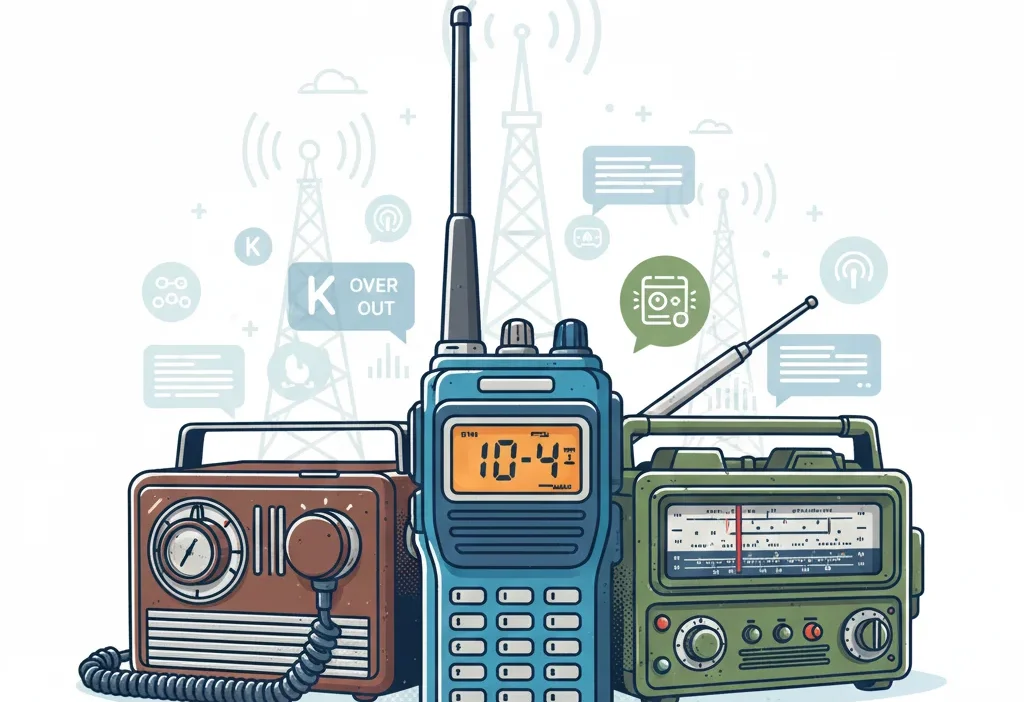
10-4 is a widely recognized numeric code meaning “OK,” “Message received,” or “Understood.”
It is commonly used in police codes, trucking CB radios, military communication, and texting.
Saying 10-4 confirms that a message has been heard, acknowledged, and fully understood.
You may have heard “10-4” in movies, police shows, CB radio chatter, or casual conversations, but few understand its origin and significance. This short phrase has a rich history in communication systems, starting from police radios and expanding to trucking, military, texting, and pop culture.
Originating from the Ten-Codes system, developed in the 1930s, 10-4 was created to make radio communication clear, concise, and effective, even in noisy or emergency situations. Over the decades, it became a symbol of acknowledgment and agreement, transcending its technical roots to enter everyday language.
People often search questions like: “Does 10-4 mean yes?”, “What does 10-4 mean in police code?”, or “What does 10-4 mean on a walkie-talkie?” This comprehensive guide will answer all those questions, explain its origins, uses, variations, and related codes, and give practical examples of how 10-4 is used today.
⭐ What Does 10-4 Mean?
At its essence, 10-4 is a numeric confirmation. It signals:
- Yes
- OK
- Message received
- Understood
This is true across multiple contexts, including:
- Police codes
- Military communication
- Trucking and CB radios
- Text messaging and casual chats
Its simplicity and clarity have made it universally recognizable, which is why it remains in use nearly a century after its invention.
⭐ The History of 10-4 and Ten-Codes
The Ten-Codes system was created in 1937 by the Association of Public-Safety Communications Officials (APCO) to standardize radio communication for law enforcement. Before the Ten-Codes, radio operators would often miscommunicate messages due to static, poor signal, or long-winded explanations.
10-4 quickly stood out as a flexible acknowledgment code. While originally a police tool, it spread to truckers, CB radio enthusiasts, and even the military, and eventually became a part of popular culture, showing up in movies, TV shows, songs, and casual conversation.
The Ten-Code system included a wide range of codes, each with a unique meaning. 10-4 became particularly popular because it was:
- Short and easy to transmit
- Clear and universally understood
- Useful in emergency situations
- Flexible across different communication contexts
⭐ What Does 10-4 Mean in Police Codes?
In police and law enforcement, 10-4 is part of the Ten-Code system, which allows officers to communicate effectively over radios, often in emergencies.
Example:
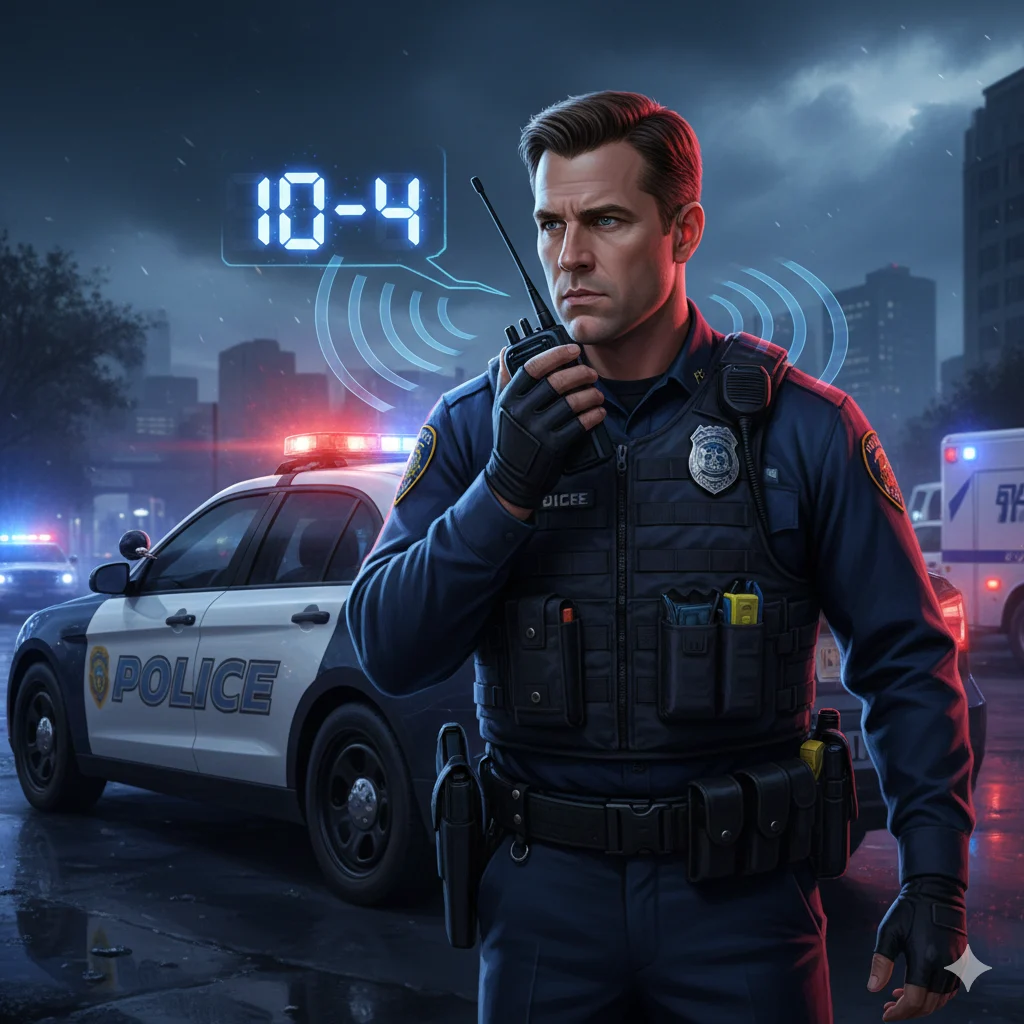
- Dispatch: “Unit 12, respond to Main Street.”
- Officer: “10-4.”
It is often searched online as:
- “What does 10-4 mean in police?”
- “What does 10-4 mean police code?”
- “What does 10-4 mean in cops?”
The main purpose is speed and accuracy, saving time while ensuring messages are acknowledged without confusion.
⭐ 10-4 in Trucking, CB Radio, and Country Slang
Truckers and CB radio enthusiasts use 10-4 daily. It is a quick way to acknowledge instructions, updates, or traffic reports.
Examples:

- “Next fuel stop at exit 14.” → “10-4.”
- “Road conditions clear.” → “10-4.”
In country slang, 10-4 has been adopted as a casual phrase meaning:
- Alright
- Got it
- Sounds good
Its cultural reach is vast, appearing in country songs, TV shows, and casual conversations beyond its original technical context.
⭐ 10-4 in Texting and Casual Conversation
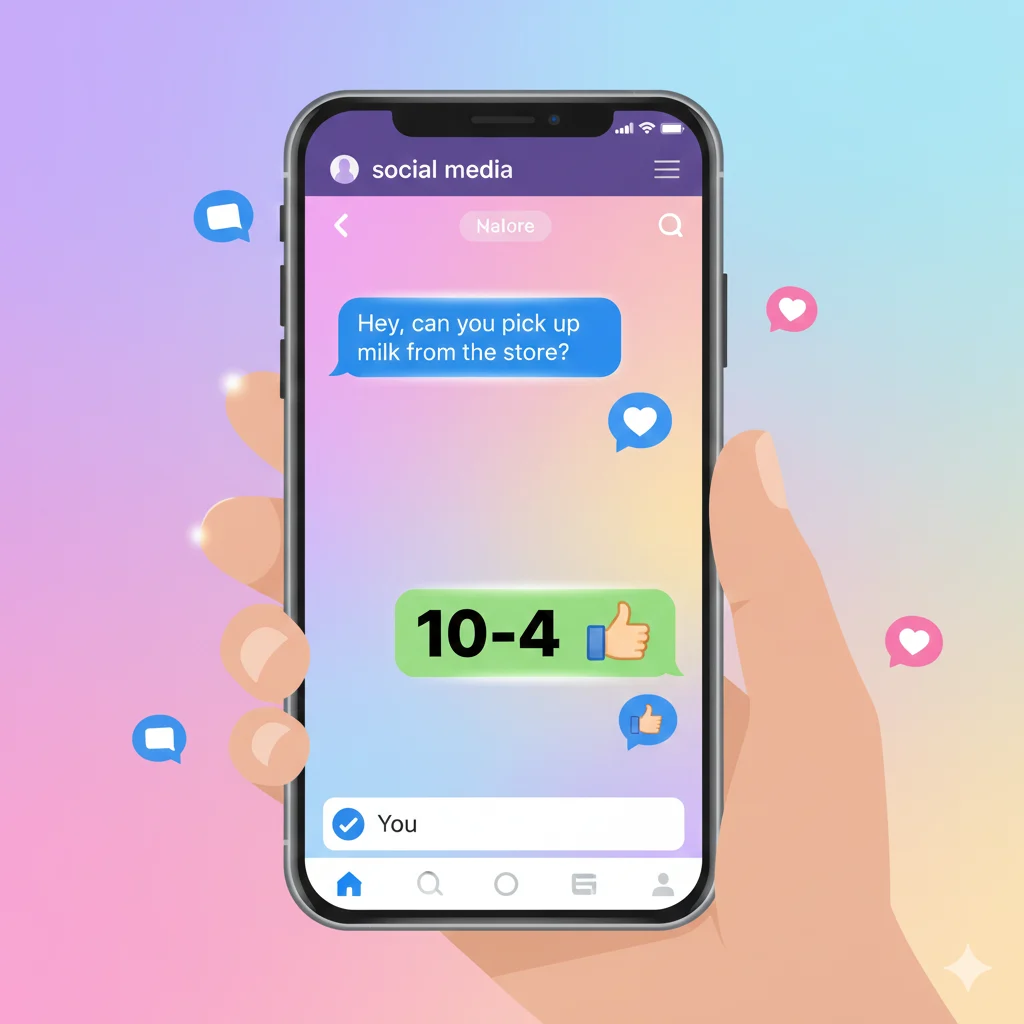
In modern texting and chat, 10-4 has become a shortcut for acknowledgment, similar to saying “OK” or “Got it.”
Example:
- Friend: “I’ll pick you up at 7 PM.”
- You: “10-4!”
It can also be written as 10/4, and the meaning remains the same. Searches include:
- “What does 10-4 mean in text?”
- “What does 10/4 actually mean?”
- “Does 10-4 mean yes?”
This shows how old communication tools have seamlessly integrated into digital communication culture.
⭐ 10-4 in Military Communication
Historically, the military used 10-4 to acknowledge messages over radios, although terms like “Roger” and “Copy” are more common today.
The code allowed soldiers to communicate quickly and clearly, especially in noisy or high-pressure situations.
Related searches:
- “10-4 meaning military”
- “What does 10-4 mean in military talk?”
Despite evolving military jargon, 10-4 remains widely recognized and understood.
⭐ Why 10-4 Instead of OK?
Numeric codes like 10-4 were created because spoken words could get lost in static or interference on radios. The numeric system offered several advantages:
- Easier to hear in noisy conditions
- Reduces miscommunication
- Universal understanding across agencies
- Faster than speaking full sentences
This is why 10-4 became the preferred acknowledgment for police, truckers, CB radio operators, and military personnel.
⭐ Related Ten-Codes You Should Know
10-4 is part of a larger Ten-Code system used for fast and clear communication:
| Code | Meaning |
|---|---|
| 10-5 | Relay or repeat message |
| 10-7 | Out of service / unavailable |
| 10-8 | In service / available |
| 10-10 | Negative / no |
| 10-20 | Location (“What’s your 20?”) |
These codes are especially useful in law enforcement, trucking, and emergency communication.
⭐ 10-4 in Math
Sometimes people search “What does 10 4 mean in math?” Here, it is just simple subtraction:
10 – 4 = 6
It has no relation to radio codes, CB talk, or texting but sometimes causes confusion.
⭐ How to Use 10-4 in Daily Life
Texting & Messaging:
- “Meeting in 5 minutes.” → “10-4!”
Gaming:
- “Cover me!” → “10-4.”
Work/Office:
- “Send the report ASAP.” → “10-4, on it.”
Family & Friends:
- “Dinner’s ready.” → “10-4.”
Walkie-Talkies & Radio Communication:
- “Can you hear me?” → “10-4, loud and clear.”
⭐ 10-4 Pronunciation
10-4 is pronounced simply as:
“Ten-Four” — short, crisp, and clear, ideal for radio or walkie-talkie use.
⭐ How 10-4 Became Popular Worldwide
- Introduced in 1937 as part of the Ten-Code system
- Became popular for clarity, speed, and ease of use
- Adopted by truckers, CB communities, military, and police
- Featured in movies, TV shows, and songs
- Today, it is recognized in texting, casual conversation, and global pop culture
Conclusion
10-4 is far more than just a number. It is a universal acknowledgment code spanning police, trucking, military, CB radio, and digital communication. Whether you use it in a walkie-talkie, a text, or hear it in a movie, it always means:
“Message received and understood.”
Its lasting popularity comes from simplicity, clarity, and reliability, making it a timeless phrase for acknowledgment, agreement, and communication.
James Joyce was a master of symbolism and consciousness, weaving deep spiritual and psychological layers into modern literature. His writings uncover the sacred within the ordinary, exploring how meaning and divinity flow through human thought, memory, and experience.