
Key Takeaways
- Adjusting asset allocation as your life progresses is essential for achieving your long-term financial goals.
- Younger investors can typically take on more risk, while those approaching retirement should emphasize safety and income.
- Regular portfolio reviews and professional advice can help optimize your investments at every stage.
Table of Contents
- Early Career: Building a Strong Foundation
- Mid-Career: Balancing Growth and Stability
- Pre-Retirement: Prioritizing Wealth Preservation
- Retirement: Ensuring Steady Income
- Regular Portfolio Rebalancing
- Considering Alternative Investments
- Seeking Professional Guidance
- Final Thoughts
Effective asset allocation is at the heart of successful investing, and it should evolve as your financial circumstances change. A thoughtful investment strategy tailored to different life stages will help you balance growth and security, ultimately supporting your long-term financial objectives. For investors looking to get started or refine their asset mix, High Pass Asset Management provides resources and expertise to help create age-appropriate portfolios.
By adjusting your allocation as you traverse milestones such as starting a career, raising a family, or approaching retirement, you can manage risk and capitalize on opportunities tailored to your unique needs. Let’s explore how your investment strategy should adapt during each stage of life.
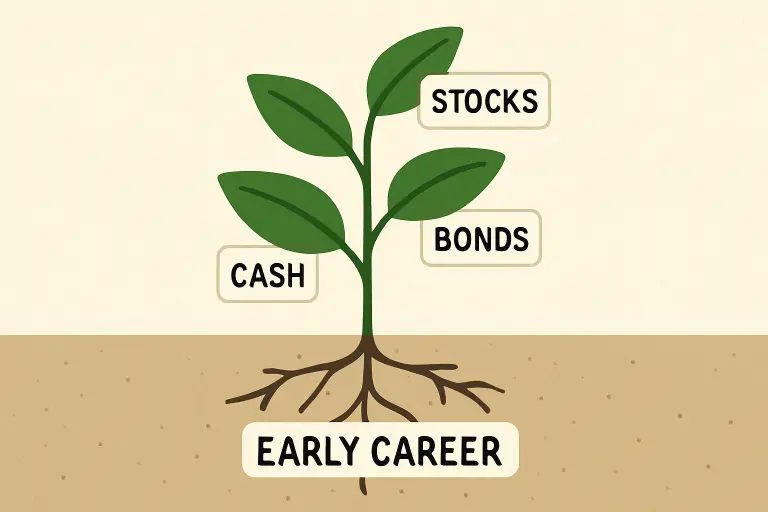
Early Career: Building a Strong Foundation
Entering your 20s or early 30s gives you a significant advantage in the investment world: time. With decades ahead to recover from market downturns and to leverage compounding, young professionals can afford to take more risk in pursuit of higher returns. Financial advisors frequently recommend allocating roughly 90% of your investment portfolio to stocks, with the remaining 10% in bonds or cash equivalents. This growth-oriented approach maximizes the long-term upside of equities, which have historically outperformed other asset classes.
During this stage, focusing on low-cost, diversified stock index funds or exchange-traded funds (ETFs) keeps fees low and allows you to capture broad market gains. Simultaneously, consistently contributing to retirement plans like a 401(k) or IRA builds your financial base. According to NerdWallet, having a high percentage of stocks while you are young can be a powerful engine for portfolio growth.
Mid-Career: Balancing Growth and Stability
In your 30s and 40s, life often brings new responsibilities, such as buying a home or supporting a family. At this stage, it becomes important to balance the desire for continued growth with safeguards against risk. Many investors shift their allocation to 70-80% stocks and 20-30% bonds. This strategic pivot introduces greater stability and reduces the likelihood that a market downturn will derail key goals, such as education planning or mid-life savings.
Employer-sponsored retirement accounts, college savings funds, and insurance needs often become more relevant during this time. Adding more bonds and defensive assets to your portfolio can help insulate it from volatility, as recommended by sources. While growth remains a priority, risk management takes on new urgency to protect your hard-earned wealth.
Pre-Retirement: Prioritizing Wealth Preservation
As you approach your 50s and early 60s, the focus shifts toward preserving what you have accumulated over the years. Market swings can have a significant impact on portfolios close to retirement, making wealth protection paramount. A popular strategy during this phase is to re-balance toward a mix of approximately 60% stocks and 40% bonds. This allocation sacrifices potential gains in exchange for greater stability and lower volatility.
It’s also a good time to integrate asset classes designed for capital preservation, such as short-term bonds, high-quality corporate bonds, and other relatively stable investments. This approach smooths returns while still allowing for moderate growth to keep pace with inflation. Regular reviews of your risk tolerance and time horizon help ensure your strategy aligns with evolving retirement goals.
Retirement: Ensuring Steady Income
When you transition to retirement, generating a stable, predictable income is often the priority. Retirees are typically advised to shift to a more conservative allocation, such as 50% bonds, 30% dividend-paying stocks for growth and income, and 10% cash for liquidity and emergencies. This mix is designed to provide enough security for your principal, sufficient income to cover living expenses, and flexibility to cover unforeseen costs.
Setting a systematic withdrawal plan and regularly evaluating your portfolio’s income-producing assets can help avoid excessive drawdowns. Maintaining some exposure to stocks is still important to hedge against inflation and extend portfolio longevity.
Regular Portfolio Rebalancing
Regardless of age, portfolios should not remain static. Market movements can cause your asset allocation to drift, potentially exposing you to greater risk than intended. Periodically rebalancing, such as once or twice a year, restores your target mix and ensures your investments stay aligned with your goals and risk tolerance. Automated rebalancing tools and target-date funds can also simplify this ongoing task.
Considering Alternative Investments
Besides traditional stocks and bonds, alternative investments such as real estate, commodities, and private equity can offer diversification and additional sources of return. However, these assets often carry unique risks, require more research, and may be less liquid. Before adding alternatives, consider your overall portfolio size, investment timeline, and risk appetite to determine whether they are appropriate for your situation.
Seeking Professional Guidance
Navigating changing market conditions and complex financial circumstances is challenging. A certified financial planner can help tailor your asset allocation to your individual goals and constraints, providing added reassurance and expertise, especially during transitional life phases. Professional advice can help you optimize tax strategies, plan for estate needs, and confidently adjust as your circumstances evolve.
Final Thoughts
Optimizing your asset allocation for your life stage is one of the most impactful steps you can take to build and preserve your wealth. Regularly reviewing your goals, shifting your investments as your needs change, and consulting reliable professionals ensure your financial plan supports you from your first job to your golden years.
Also Read
- How Technology is Revolutionizing Patient Engagement
- How Inverter Technology Is Changing Home Heating and Cooling
- Comfort and Care: Transforming Daily Life for Older Adults