Understanding Accelerated Depression Treatments
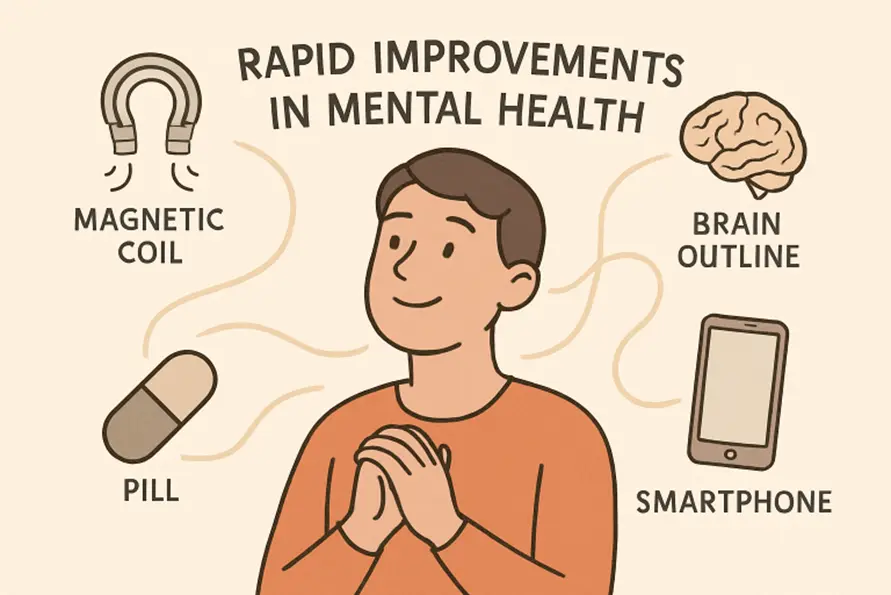
In recent years, the landscape of depression therapy has evolved to include new options that can offer relief far faster than traditional treatment methods. For people enduring severe depressive episodes, expedited recovery is life-changing. Treatments like accelerated TMS therapy stand out for their promise of rapidly reducing debilitating symptoms.
Accelerated therapies differ from conventional medications and talk therapy. They are designed to act quickly—sometimes within days—by directly targeting neural circuits or brain chemistry associated with depression. These approaches have proven especially valuable for individuals with treatment-resistant depression (TRD), for whom relief may have previously felt out of reach.
Speed is critical for people facing acute distress or suicidality. Where older therapies might require months for results, innovative intervention protocols now enable substantial improvement in just a week. Such urgent relief can restore hope and function for those in crisis.
The best candidates for these advanced strategies are often patients who have tried multiple standard treatments with limited or no benefit. Consulting a clinician experienced in these cutting-edge therapies is essential to navigate the available options and determine a personalized plan of care.
Deep Transcranial Magnetic Stimulation (Deep TMS)
Deep TMS utilizes powerful, targeted magnetic pulses to stimulate specific brain regions involved in mood regulation. The procedure is non-invasive and well-tolerated, offering new hope for individuals with major depressive disorder (MDD). FDA clearance of accelerated protocols has recently reduced the typical course from four weeks to as little as six days, making Deep TMS one of the fastest non-drug options for resistant depression.
Sources such as Medscape highlight the treatment’s strong safety profile and effectiveness, with many patients reporting noticeable improvement in less than a week. This has led to broader integration of accelerated TMS in leading medical centers nationwide.
Stanford Accelerated Intelligent Neuromodulation Therapy (SAINT)
Building upon the principles of TMS, SAINT represents a hyper-accelerated approach. It delivers several TMS sessions per day—at precisely mapped brain sites and carefully timed intervals—personalized to each patient’s brain connectivity. In peer-reviewed studies, SAINT has achieved remission rates as high as 79% for people with treatment-resistant depression, frequently within just five days.
Hospitals in select regions have integrated SAINT into their programs, often for individuals with the most severe and refractory cases. Sutter Health details its implementation of this protocol and the profound impact it has had on previously untreatable cases.
Deep Brain Stimulation (DBS)
Deep Brain Stimulation (DBS) is a minimally invasive surgical procedure that involves implanting electrodes into targeted regions of the brain to deliver controlled electrical pulses. Traditionally recognized for its success in treating movement disorders such as Parkinson’s disease and essential tremor, DBS has recently shown promising results in the field of psychiatry, particularly for patients suffering from severe, treatment-resistant depression. Clinical studies indicate that some individuals experience rapid and significant mood improvement immediately following electrode placement and activation, highlighting DBS as a potential intervention for life-threatening depressive syndromes that do not respond to conventional therapies. Ongoing research continues to explore its safety, efficacy, and long-term outcomes, offering hope to patients and families navigating the challenges of chronic mental illness. For more detailed insights, see The New York Times coverage on DBS research and patient experiences.
Ketamine and Esketamine Therapies
Unlike traditional antidepressants, which primarily target monoamine neurotransmitters such as serotonin, norepinephrine, and dopamine, ketamine works through glutamate pathways, producing rapid antidepressant effects often within hours. This unique mechanism has been particularly transformative for patients experiencing severe depressive episodes, treatment-resistant depression, or acute suicidal ideation. Intravenous ketamine infusions can provide immediate symptom relief, offering a critical option when conventional medications fall short. Additionally, esketamine, an FDA-approved nasal spray derived from ketamine, is now available in clinical settings for adults with major depressive disorder who have not responded to other treatments. Research, including findings summarized by the National Institute of Mental Health, highlights ketamine’s fast-acting potential, marking it as a breakthrough therapy for the rapid management of symptoms and improved patient outcomes.
Digital Therapeutics
Digital therapeutics are transforming mental health care by delivering app-based interventions and cognitive training programs that users can access anytime, anywhere. These platforms offer personalized exercises, interactive modules, and real-time feedback, designed to target the underlying thought processes and behavioral patterns associated with conditions such as depression. By promoting consistent practice and self-guided learning, digital therapeutics complement traditional therapy, making mental health support more accessible and scalable. Over time, these tools can help individuals develop healthier coping strategies, improve emotional regulation, and foster lasting changes in mood and behavior.
The FDA recently approved digital applications for depression that target brain circuits and offer a new layer of accessibility and non-invasive care. Read more about the rise of app-based therapy from TIME.
Considerations and Future Directions
Although accelerated therapies for depression offer promising new treatment options, careful individual assessment and professional supervision remain crucial. Each patient’s medical history, potential contraindications, and susceptibility to side effects must guide the selection and application of these interventions. Personalized approaches ensure both safety and maximum therapeutic benefit, minimizing risks while optimizing outcomes. Ongoing research continues to refine these methods, enhancing effectiveness, safety, and ease of use. As advancements progress, patients and clinicians can expect an expanding range of well-studied, innovative tools designed to address treatment-resistant depression and improve overall mental health care outcomes.
Keeping up with fast-evolving developments in mental health treatment allows patients and their families to access innovative approaches to recovery while working closely with experienced professionals. Emerging accelerated therapies for depression provide timely relief, addressing symptoms more quickly than traditional methods and giving individuals the support they need when it matters most. By staying informed, patients can make educated decisions about their care, explore a broader range of treatment options, and actively participate in their recovery journey. These advancements have the potential to transform lives, improve well-being, and foster hope for sustained mental health outcomes.
Also Read-How Technology is Revolutionizing Patient Engagement