Choosing between a new construction home and an existing property is one of the first decisions buyers face on their journey to homeownership. Both paths have unique strengths and challenges that can affect everything from your move-in timeline to long-term costs and your community experience. To make the right choice for your family, it is essential to weigh the practical details that matter most, such as price, maintenance, and the lifestyle each option offers. If you are exploring options in the Bay Area, check out Redwood City Homes for Sale for a diverse range of available properties.
Beyond affordability and style, differences in design, customization, and the potential for repairs or renovations can be deciding factors in whether a buyer chooses a brand-new home or a classic residence. Energy efficiency and community maturity also play significant roles in this decision-making process.
With rapid changes in the real estate market, buyers should understand how current trends and local inventory can affect both new and existing home options. Consulting experienced professionals and researching neighborhoods can provide deeper insight into which choice fits your priorities. These factors will influence your daily life, your budget, and your long-term satisfaction with your new residence.
According to industry experts, no one option is perfect for everyone. Your path to homeownership should reflect your future goals as well as your practical needs today. Let us examine the key pros and cons of each home type to help clarify your best route forward.
Advantages of New Construction Homes
- Modern Design and Customization: New homes are typically built with open floor plans, larger windows, and up-to-date architectural features. Buyers often have the opportunity to personalize aspects of the build, such as cabinetry, lighting, flooring, and fixtures, making the home truly their own.
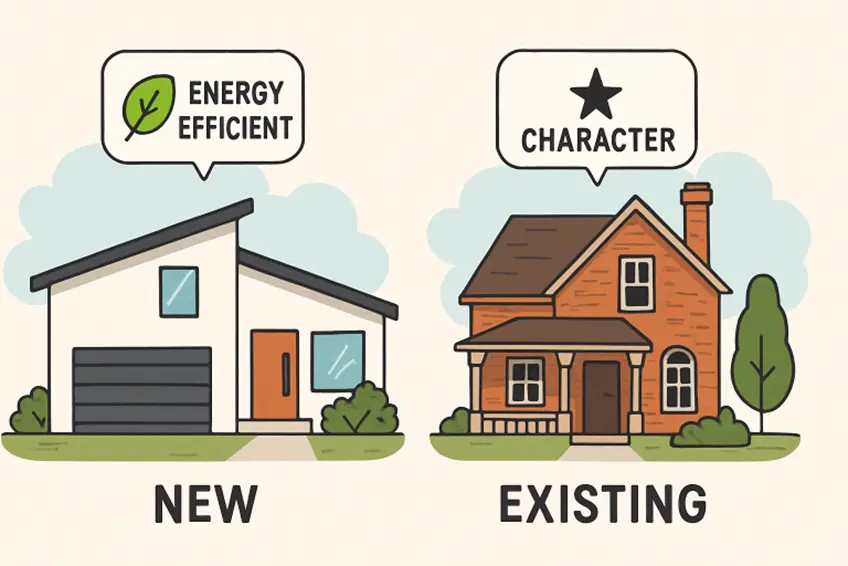
- Energy Efficiency: New construction homes are designed to meet stricter energy-efficiency building codes. Modern insulation, high-performance windows, and updated HVAC systems often mean lower monthly utility bills and reduced environmental impact. For additional details on energy-smart homes, see this New York Times guide to building green homes.
- Lower Maintenance Costs: With freshly installed systems, appliances, and roofs, homeowners can expect minimal repairs and lower maintenance expenses in the early years, easing the stress of home upkeep.
- Builder Warranties: Many new homes come with warranties that protect major structural components and essential systems, often lasting several years. This peace of mind is a strong selling point for buyers concerned about unforeseen issues in the early period of ownership.
Disadvantages of New Construction Homes
- Higher Upfront Costs: New builds tend to carry a price premium over older properties in the same community. According to national data, buyers can expect the median price of a new home to be significantly higher than that of existing homes. More on price trends is available from Realtor.com.
- Longer Wait Times: Purchasing a new home may mean waiting several months for the property to be completed. This can be a disadvantage for buyers who need to move quickly or have limited flexibility in their timeline.
- Developing Neighborhoods: Much new construction is in communities that are still being established, which may lack mature landscaping or established amenities such as parks, shops, and schools.
Advantages of Existing Homes
- Established Neighborhoods: Existing homes are typically set in well-developed areas that offer mature trees, a sense of community, and proximity to schools and local amenities.
- Immediate Availability: Most existing homes are move-in ready, significantly shortening the time from purchase to occupancy.
- Potential for Negotiation: Sellers of existing homes may be more flexible in negotiating price, closing terms, or the inclusion of appliances and furnishings, potentially saving buyers additional costs.
- Unique Character: Many older homes boast architectural features and character that reflect the style and craftsmanship of previous eras, providing charm difficult to replicate in newer builds.
Disadvantages of Existing Homes
- Maintenance and Repairs: Older properties may require upgrades or immediate repairs, such as roof replacements, plumbing updates, or electrical work, leading to unplanned expenses.
- Energy Inefficiency: Many existing homes were built before modern energy standards and lack efficient insulation or window technology. Upgrading to current efficiency standards can add further costs.
- Outdated Designs: Floor plans or finishes may not align with today’s preferences, which could necessitate remodeling or renovations soon after moving in.
Making the Right Choice
Deciding between a new construction home and an existing home involves considering your personal preferences, budget, and timeline. Incorporate long-term expenses like potential renovations or ongoing maintenance, and evaluate how neighborhood stability, school choices, and local amenities will fit your plans. Engaging with a local real estate agent can provide tailored expertise and help you analyze available options in your area. The perfect home for you balances your immediate needs with your aspirations for the years ahead.
Both new and existing homes offer distinct advantages and potential challenges. New homes often feature modern designs, energy-efficient systems, and fewer immediate repairs, while existing homes may provide established neighborhoods, character, and potentially lower costs. By carefully weighing factors like budget, maintenance, location, and long-term goals, buyers can make an informed choice that aligns with their financial plans and lifestyle preferences and ensures a smooth, satisfying transition into their next home.
Also read
- How Technology is Revolutionizing Patient Engagement
- Professional Cleaning Solutions for Business Environments
- How wholesale womens clothing suppliers help scale fashion businesses

James is a senior editor at axprassion.com with over a decade of experience in crafting compelling narratives and making complex topics accessible. His articles and interviews with industry leaders have earned him recognition as a key influencer by organisations like Onalytica. Under his leadership, publications have been praised by analyst firms such as Forrester for their excellence and performance. Connect with him on