You might be feeling a little stuck with your oral health right now. Maybe you brush and floss most days, yet every checkup at a dentist in Westwood, NJ seems to end with another cavity, another warning about your gums, another bill you did not expect. You do what you were told as a kid, but the results are not matching the effort, and that can feel frustrating and a bit unfair.end
On the other side of that frustration is a different picture. You walk into your dental appointment already knowing what your mouth needs, which habits matter most for you, and why. You understand what the dentist is looking for and what you can do at home to prevent small issues from turning into big ones. The visits feel calmer, the treatment plan makes sense, and the surprises are fewer and smaller.
The bridge between those two experiences is not just better brushing. It is education. When you understand how your mouth works and what actually prevents disease, you are more likely to stick with good habits, catch problems early, and avoid many of the more serious treatments entirely. That is what preventive dental care through patient education really means. It is about you having enough clear, practical information to stay in control of your oral health instead of feeling like things are just “happening” to you.
So where does that leave you today. It means you do not have to become a dental expert, but you do deserve explanations that are simple, honest, and tailored to your life. Once you have those, preventive care stops being a mystery and starts becoming a routine that works.
Why do problems keep showing up if you are “doing everything right”?
It often starts with a familiar pattern. You get a reminder for your cleaning, you go in, you sit through the scraping and polishing, and then you hear it. “You have a couple of small cavities starting.” Or “Your gums are a little inflamed.” You nod, feel a bit discouraged, and promise to “do better,” but no one really explains what “better” looks like for you.
Because of this gap, you might walk out with a free toothbrush and a vague sense of guilt. You were told to floss more, maybe cut back on sugar, and come back in six months. That is not a plan. That is a wish. Without real understanding, it is hard to change anything in a lasting way.
There is also the emotional side. Dental issues touch on appearance, comfort, and money. Tooth pain can be scary. Treatment costs can be stressful. When you do not fully understand why something happened or what other options existed, it can start to feel like you are always one step behind and always paying for it.
So what is missing. Often it is this. No one has connected the dots between your daily habits, your specific risk factors, and the problems your dentist keeps seeing. That is where strong patient education becomes the key to successful preventive dentistry.
How does patient education actually prevent dental problems?
Think about a simple cavity. It is not just “bad luck.” It is the result of bacteria in plaque using sugars from your food, producing acids that weaken your enamel over time. If that process is interrupted early through brushing with fluoride toothpaste, flossing, and smart food choices, the tooth can stay healthy. If it continues, the enamel breaks down and a cavity forms.
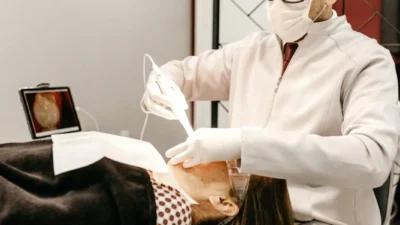
When someone explains this to you in clear language, with your own teeth on the screen or in the mirror, something important shifts. You are not just told to “brush better.” You see why brushing at night is non-negotiable. You understand why sipping sugary drinks all day is more damaging than having dessert with a meal. You start to see the logic behind each recommendation, not just the instruction.
Public health experts emphasize this too. The Centers for Disease Control and Prevention highlight that regular care, fluoride, and healthy habits work best when people understand and use them consistently. Education is what turns a list of tips into a routine that fits your real life.
The same is true for gum disease. If you know that bleeding gums are not “normal” and often signal inflammation, you are more likely to take that early sign seriously. Education helps you recognize warning signs and seek care before pain or infection show up.
So, instead of a dentist simply saying “you need a deep cleaning,” education sounds like this. “Here is what I am seeing under your gums. Here is how plaque and tartar have affected the bone. Here is what this treatment does, and here is what you can do at home so we do not end up in this same spot again.” That kind of conversation changes how you show up for your own health.
What difference does good education make compared to “just cleaning teeth”?
It can help to see this in a simple comparison. Many people still think of dental care as “I go in twice a year, they clean my teeth, and that is enough.” But when you add strong education to preventive care, outcomes often change.
| Approach | What Usually Happens | Risks | Benefits |
|---|---|---|---|
| Basic cleanings without much education | Teeth are polished, brief reminders to brush and floss, limited discussion of habits or risks | Same issues repeat each visit, more unexpected cavities or gum problems, higher long term costs | Short term “fresh” feeling, some plaque removed, problems occasionally caught early |
| Preventive care with strong patient education | Cleanings plus clear explanations, personalized home care plan, questions encouraged and answered | Requires a bit more time and engagement, may feel uncomfortable to face habits honestly at first | Fewer new problems, earlier detection, better home care, more control, often lower costs over time |
Research backs this up. Preventive guidance and screening in adults are recognized as important parts of care, and the U.S. Preventive Services Task Force discusses how counseling and screening can influence oral health outcomes. When education is built into visits, people are more likely to use proven preventive tools like fluoride toothpaste, regular checkups, and healthy behaviors.
There is also a financial angle. The more you understand and apply preventive steps, the more likely you are to avoid root canals, extractions, and extensive restorative work. Those are the procedures that tend to create the biggest financial and emotional stress. Good education does not guarantee you will never need treatment, but it often reduces how often and how urgently those treatments are needed.
What can you do right now to make preventive dental care work for you?
You do not have to change everything overnight. A few focused steps, grounded in clear information, can start to shift your oral health in a real way.
1. Ask your dentist to “teach,” not just “treat”
At your next visit, tell your general dentist that you want to understand what they see and why they recommend certain care. You might say, “Can you walk me through what you are seeing on my gums and teeth, and what I can do at home to prevent this from getting worse.”
Ask specific questions. What is my biggest risk right now. Are my gums healthy. How can I tell at home if things are improving. Which one or two changes would make the biggest difference for me. When you invite a two way conversation, you turn a routine visit into a coaching session for your mouth.
Health agencies encourage this kind of clear communication. Tools from the Health Resources and Services Administration stress the importance of helping patients understand and act on dental information. You deserve that same level of clarity in your own care.
2. Build a simple, realistic routine you can actually keep
Education only helps if it turns into habits. Instead of trying to copy an ideal routine that does not fit your life, work with your dentist to create one that you can sustain.
For many adults, that might look like this. Brush twice daily with fluoride toothpaste for two minutes each time. Floss or use interdental brushes once a day at a time you are not rushed, like in the evening while watching TV. Rinse with a fluoride mouthwash if your dentist recommends it, especially if you have a history of cavities.
Then connect each step to the “why” you learned. For example, “I brush at night because that is when plaque can do the most damage while I sleep.” When your routine has meaning, it feels less like a chore and more like an investment in your comfort and confidence.
3. Watch for early signs and respond instead of waiting for pain
One of the biggest benefits of patient education in preventive dentistry is learning what early trouble looks like. Do your gums bleed when you floss. Is there sensitivity to cold that lingers. Do you notice persistent bad taste or bad breath. These can be early signals that something needs attention.
Instead of waiting until you are in real pain, use what you have learned to reach out sooner. A quick call and a simple visit can often address a small issue before it turns into a bigger, more costly, and more stressful problem. Think of yourself as the first line of defense. Your dentist is the partner who steps in when you spot a concern.
Bringing it all together so your preventive care finally “sticks”
You may have gone through years of dental visits feeling talked at rather than talked with. That can leave you feeling discouraged and a little powerless. It does not have to stay that way. When your general dentist takes time to explain what is happening in your mouth, and you feel comfortable asking questions, preventive care becomes something you do together, not something done to you.
You deserve to understand your own health. You deserve clear language, honest answers, and a plan that respects your time, budget, and daily reality. With that kind of support, patient education stops being a buzzword and becomes the foundation of your long term oral health success.
The next step is simple. At your upcoming visit, speak up about your goal to prevent problems, not just fix them. Ask for explanations. Ask for a realistic plan. One informed conversation at a time, you can move from feeling reactive and worried to feeling steady, informed, and in control of your smile.
Read more: Why Accounting Firms Are Integral To Succession Planning
Why a Separation Agreement Is the Most Important Document in Your Loudoun County Divorce
5 Services Families Can Expect From A Cosmetic Friendly Dental Practice