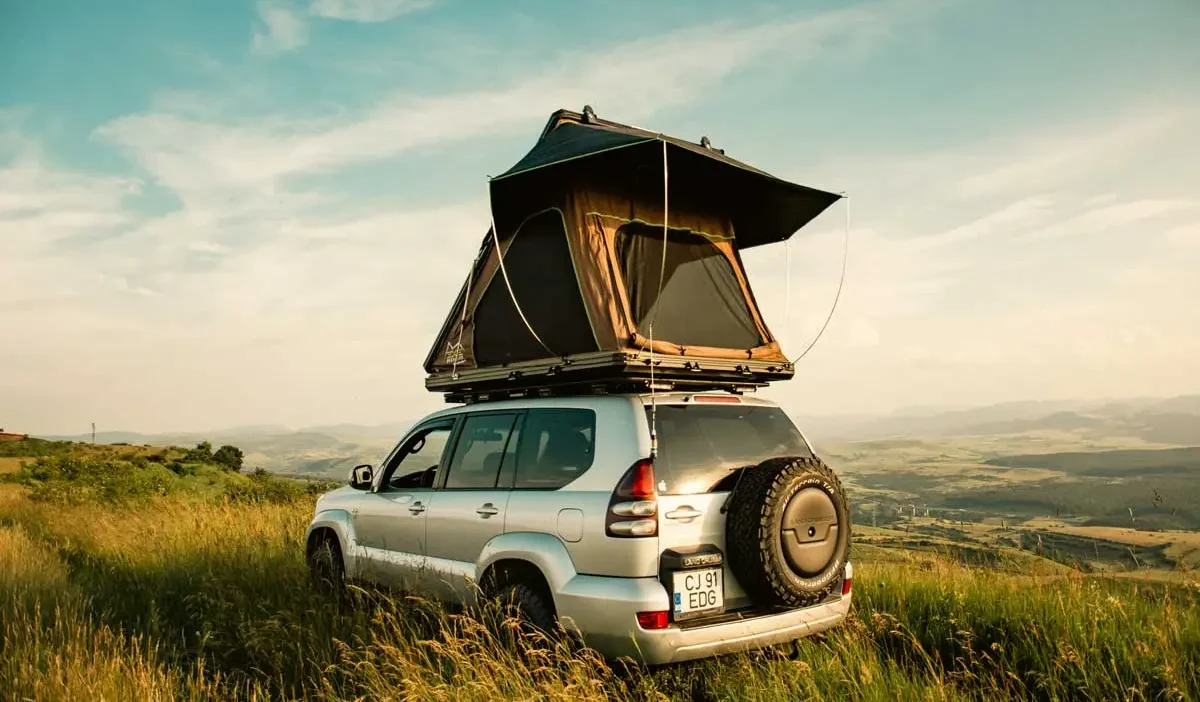
A rooftop camping tent transforms any 4WD into a mobile accommodation solution that sets up in minutes and provides comfortable sleeping space elevated above ground hazards, wildlife, and uneven terrain. These tents mount directly to roof racks, using the vehicle’s structural strength to support occupants while keeping the ground footprint minimal. Australian overlanders increasingly adopt rooftop tents for remote area travel because they eliminate the need to find flat ground or worry about flooding during unexpected rain. Quality models withstand harsh outback conditions including intense sun, high winds, and temperature extremes while providing insulation and weather protection that ground tents struggle to match. The main considerations involve vehicle roof load capacity, tent weight when occupied, and whether the convenience justifies the $2000-5000 investment compared to traditional camping setups.
Weight Distribution and Vehicle Load Ratings
Every vehicle has a dynamic roof load rating for driving and a static rating for when parked. These differ significantly. A 4WD might have 75kg dynamic capacity but 200kg static capacity. The rooftop tent, occupants, and bedding need to stay within the static rating when occupied.
Most rooftop tents weigh 50-70kg for hard shell models and 40-60kg for soft shell designs. Add two adults at 75kg each plus bedding, and you’re at 200-220kg total. This exceeds many vehicles’ static ratings, which is honestly a concern manufacturers don’t always address clearly.
Real-world experience suggests many 4WDs handle this load without issues because roof structures have safety margins beyond published ratings. But it’s technically exceeding specifications. Some overlanders reinforce roof racks or add supporting structures to increase capacity, though this voids some warranties.
Hard Shell Versus Soft Shell Design Trade-offs
Hard shell tents use rigid panels, usually aluminum or fiberglass composite, that fold open and closed. Setup takes 30-60 seconds, literally just unlatching and pushing up. They’re aerodynamic when closed, improving fuel economy compared to soft shells.
The downsides are weight and cost. Hard shells weigh more because of the rigid materials. They also cost significantly more, typically $3500-5000 versus $2000-3000 for equivalent soft shell models. You’re paying for convenience and aerodynamics.
Soft shell tents use fabric throughout and fold or roll closed. Setup takes 2-5 minutes because you’re unfolding fabric, extending poles or frames, and securing everything. They’re lighter and cheaper but create more wind resistance when driving, which noticeably affects fuel consumption on long trips.
Weather Protection in Extreme Conditions
Australian outback conditions test camping equipment thoroughly. Summer temperatures above 40°C during the day, dropping to 10-15°C at night. Sudden storms with high winds and heavy rain. Intense UV exposure that degrades materials.
Quality rooftop tents use 280-320gsm ripstop canvas with waterproof coatings rated for 2000mm hydrostatic head or higher. This keeps rain out during serious storms. Cheaper tents use lighter fabrics that leak in extended rain or high winds that drive water through the weave.
Insulation matters more than marketing suggests. Most rooftop tents offer minimal insulation, maybe 10-20mm foam in the mattress base. This isn’t enough for cold weather camping. Serious users add insulation layers or thermal blankets for winter trips.
Mounting System Requirements and Installation
Rooftop tents mount to roof racks, not directly to vehicle roofs. You need a quality roof rack system rated for the tent’s weight plus occupants. Cheap racks aren’t suitable for this application because the loads exceed their design specifications.
The mounting track system needs to match between tent and rack. Most use standard track widths around 1200-1300mm, but verify compatibility before buying. Mismatched track widths require adapters or won’t mount at all.
Installation takes 2-3 hours with two people. The tents are bulky and awkward to position alone. You’re lifting 50-70kg onto a roof rack, then aligning mounting brackets while supporting the weight. Having help makes this manageable instead of dangerous.
Fuel Economy Impact of Roof-Mounted Weight
Adding 60kg to your roof significantly affects vehicle dynamics and fuel consumption. The higher center of gravity changes handling, making the vehicle slightly less stable in quick maneuvers. You notice this most in crosswinds or when changing lanes quickly.
Fuel consumption increases by 10-20% depending on driving conditions. Highway driving sees the worst impact because of aerodynamic drag. City driving has less impact because speeds are lower and drag matters less than weight. On long outback trips covering thousands of kilometers, this represents substantial fuel costs.
Some overlanders remove rooftop tents for daily driving and only mount them for trips. This works but defeats the convenience factor. Mounting and unmounting repeatedly also wears the attachment hardware.
Setup Speed and Convenience Factors
The marketing promise is quick setup camp anywhere. Reality is close but with caveats. You need level ground for the vehicle, or at least level enough that sleeping won’t be uncomfortable. Finding suitable spots takes time.
Trees and overhead obstacles limit where you can deploy most rooftop tents. They need clearance to open, typically 1.5-2 meters above the vehicle roof. Dense forest camping doesn’t work unless you find clearings.
The ladder access is challenging for some people. Climbing a ladder to bed after a long day feels tiring. Getting up during the night for bathroom breaks means ladder navigation in the dark. Kids and elderly travelers sometimes struggle with this.
Annex and Extension Options
Many rooftop tents support annexes, additional rooms that attach to the tent and extend to the ground. These create covered living spaces for gear storage, cooking areas, or extra sleeping room. The setup time increases to 15-30 minutes when adding annexes, reducing the quick-camp advantage.
Annexes attach to the tent’s sides using zippers or clips. Quality of attachment hardware varies significantly between brands. Cheap attachments fail or leak at connection points. Wind puts stress on these connections, and poorly designed systems don’t handle gusts above 40-50km/h.
Also Read
- CFA Level 1 Syllabus Explained Through Real Market Scenarios
- How to Sell Your House Fast Without a Realtor
- What Does Halal Mean? The Meaning Most People Miss